

Confirmation bias is the tendency to process information by looking for, or interpreting, information that is consistent with one’s existing beliefs1. This biased approach to decision-making is largely unintentional and often results in ignoring inconsistent information. Existing beliefs can include one’s expectations in a given situation and predictions about a particular outcome. People are especially likely to process information to support their own beliefs when the issue is highly important or self-relevant.
In a previous article, I outlined the differences between two distinct cultures – compliance and commitment. This post describes how a confirmation bias can perpetuate a culture of compliance. I will also discuss how the conversations that take place in a work place with a culture of commitment minimize the potential for confirmation bias.
Culture of Compliance
The model below explains how confirmation bias influences decision-making (and the actions taken by managers) when an organization is managed through compliance.
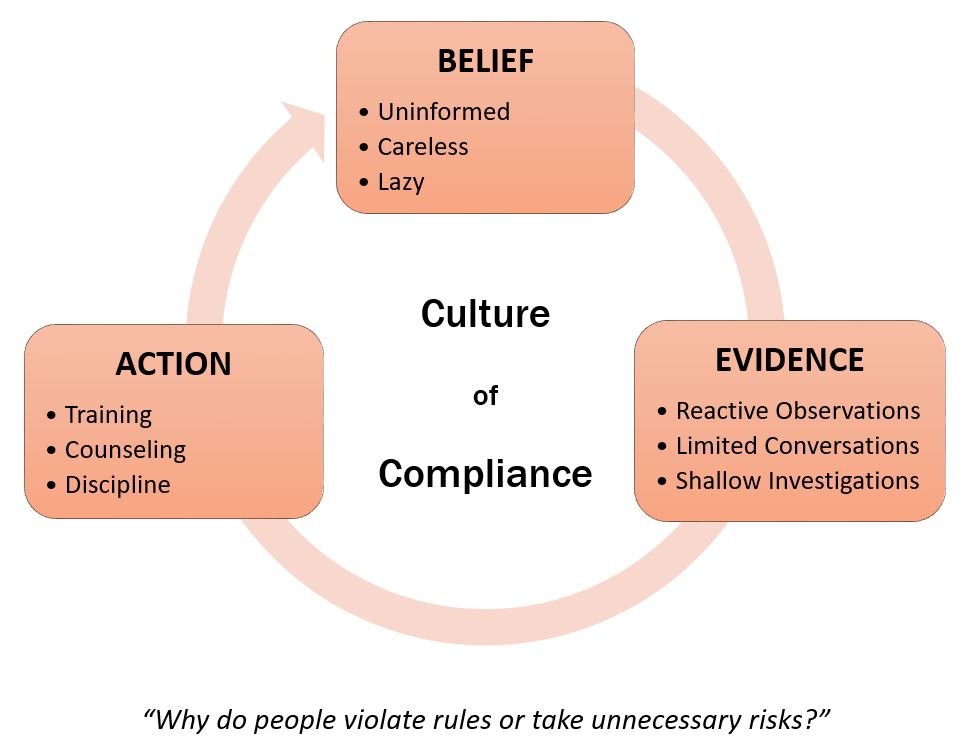
It begins with a person’s existing beliefs.


 As the engineering manager of a large manufacturing facility, Rick had a knack for identifying talent. Whether he was recruiting on campus or interviewing candidates with some experience, Rick had a set of criteria that guided his decision-making. It started with GPA and class rank, but also included other accomplishments such as patent applications, publications, research grant awards, and other recognition. Everyone agreed that Rick attracted the best and brightest professionals to join his staff. Rick recruited for exceptional talent.